🇫🇷 Français • 🇩🇪 Deutsch • 🇵🇹 Português
We live in a world that never stops talking. Messages keep coming in, to-do lists keep filling up, and so do the days. We move through life with one eye on the clock. Most of us carry this constant sense of running behind on something, without always knowing what.
This pace shapes us. It keeps us available to everyone else, and a little less available to ourselves. Over time, it wears down something precious: our ability to adapt. We hold on, but holding on gets harder. And there’s always that leftover frustration over everything we didn’t get to.
The brain, though, hasn’t lost a thing. It still holds the ability to shift states — from restlessness to calm, from scattered to focused, from heaviness to momentum. That ability needs looking after, just like anything else.
That’s exactly what we work on with NeuroVIZR®.
Neuroplasticity, in plain English
The brain keeps changing throughout your entire life. It forms new connections, lets go of others, depending on what it goes through. That’s what we call neuroplasticity.
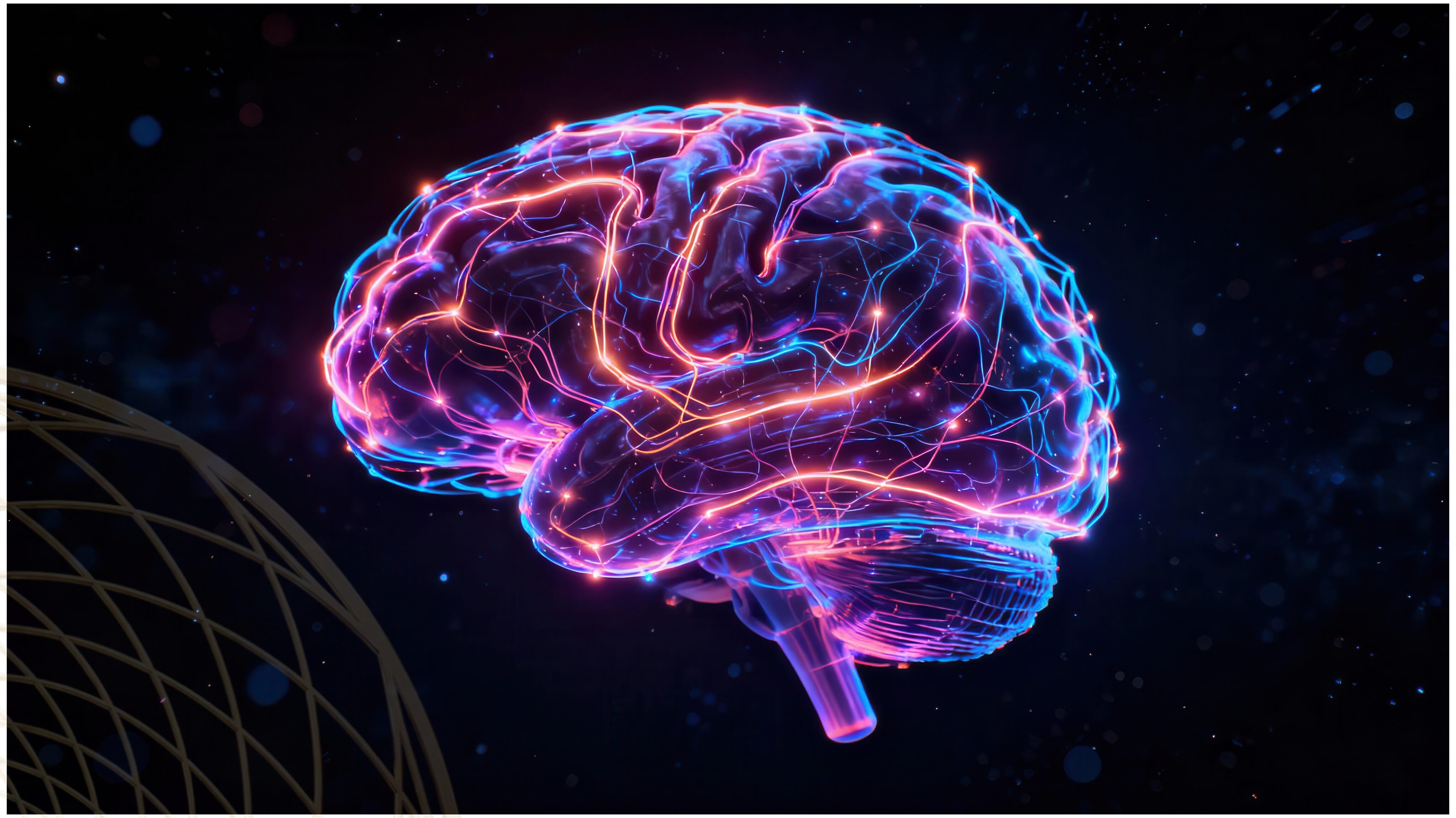
Two different things happen here. There’s the state: a short-lived shift, lasting a few hours. And there’s the trait: a tendency that settles in through repetition. Feeling calm one evening is a state. Becoming someone who finds their calm more easily is a trait.
A brain that lives the same routine for too long starts cutting corners. It predicts, it automates, it processes things with less and less nuance. Mental fatigue, thoughts that won’t stop circling, sleep that refuses to come — these are often signs of a way of functioning that’s grown stiff.
To regain flexibility, the brain needs novelty. Real novelty — the kind that forces it to actually process, rather than just guess.
The brain, and everything working alongside it
We like to compare the brain to a remarkable switchboard. It receives, it sorts, it directs traffic. It takes part in neurotransmitter exchanges right across the body.
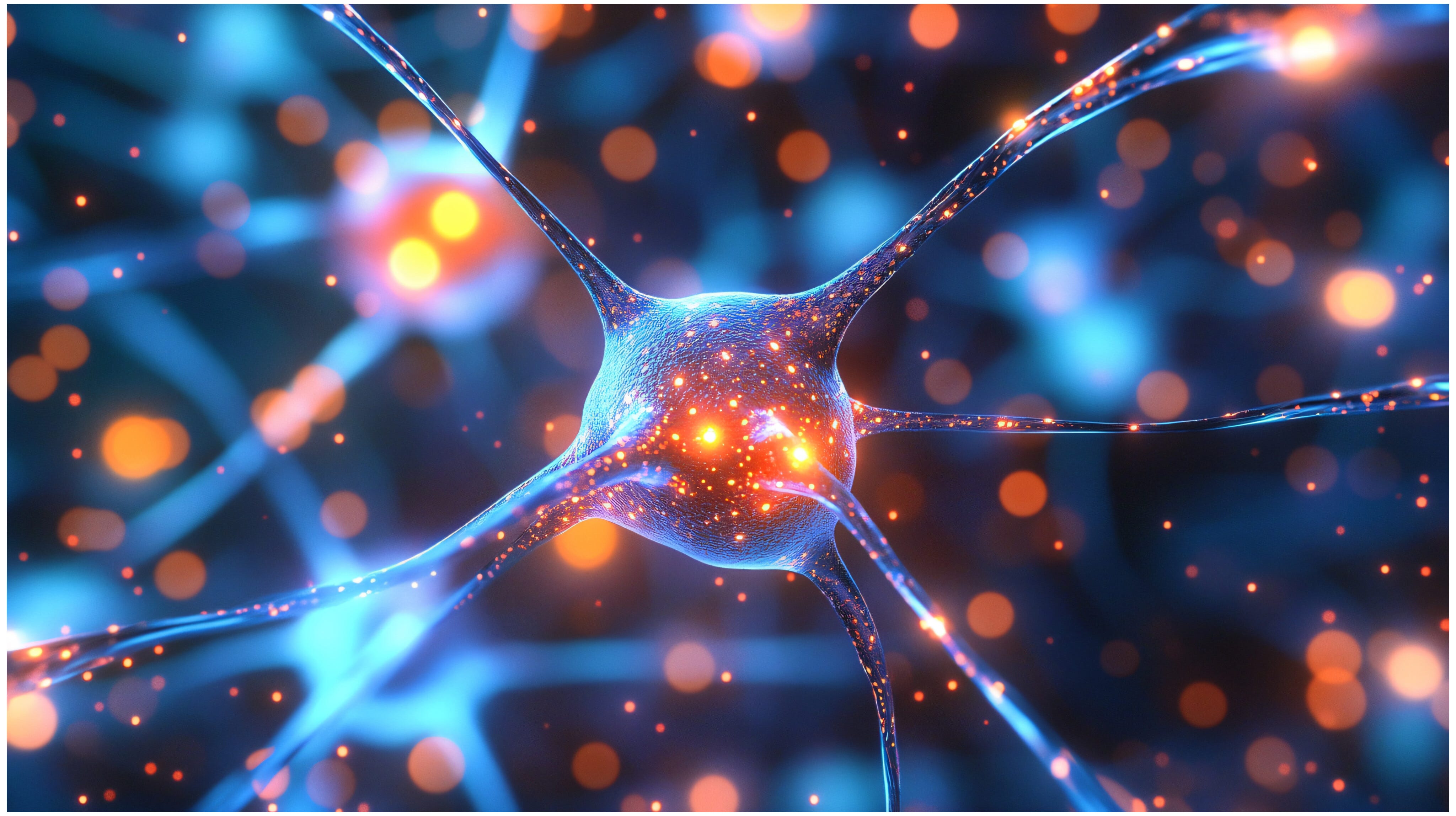
Our view doesn’t stop there. Memory, thought and emotion don’t live in the head alone. The gut holds its own dense network of neurons. Emotions, for their part, involve the whole body: breathing, muscle tone, digestion, sleep.
So a stimulation built on light and sound doesn’t stop at the brain. It resonates with the way the whole system works. Sometimes it reaches something deeper, on the emotional side of things. And it can support inner work that goes well beyond the session itself.
That’s how we’ve come to read things — shaped by years spent in the field.
What NeuroVIZR® actually is
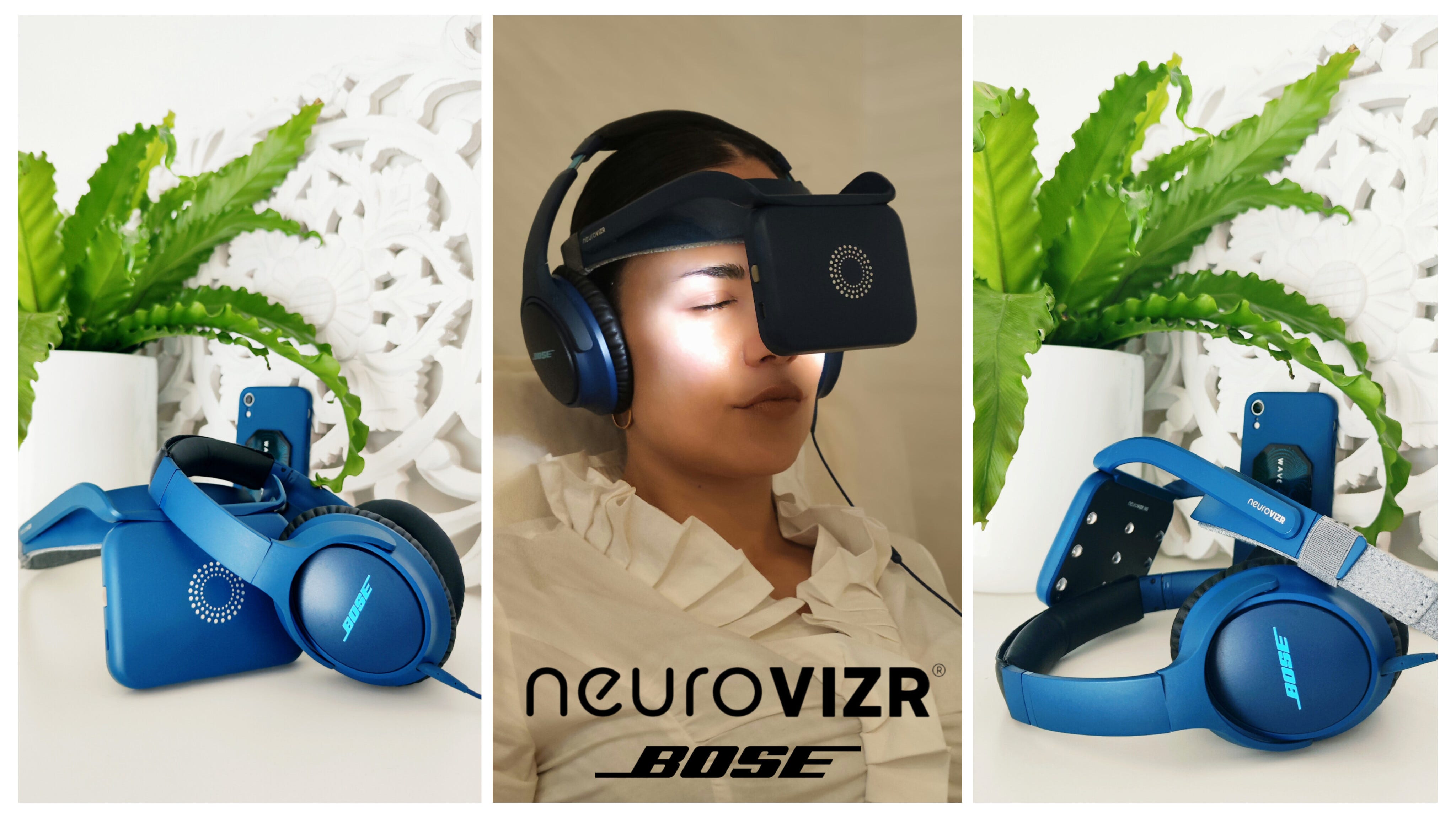
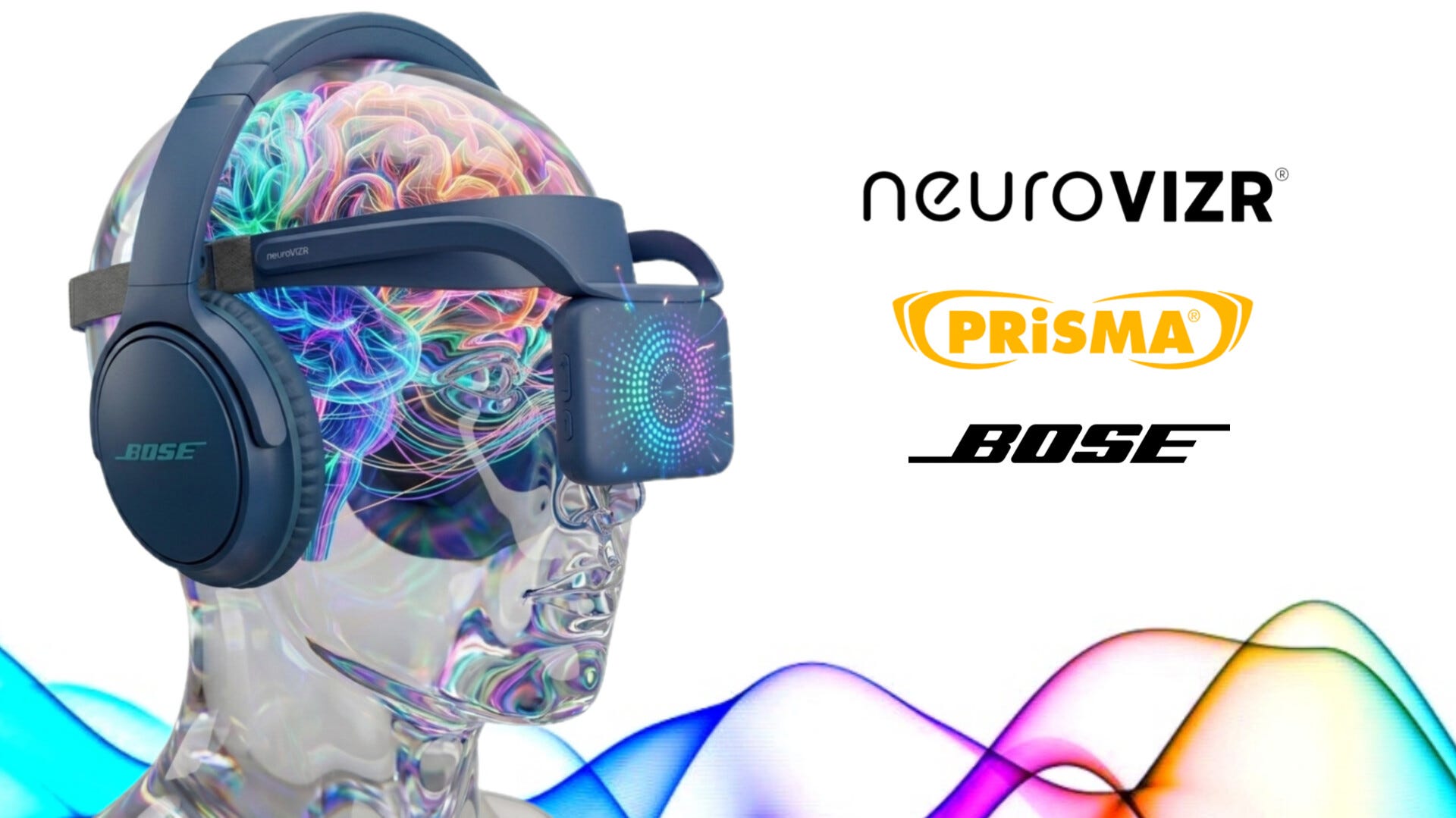
A lightweight headset. An LED panel sitting in front of your eyes, which stay closed the whole way through. Sound delivered through earphones. All of it run from an app.
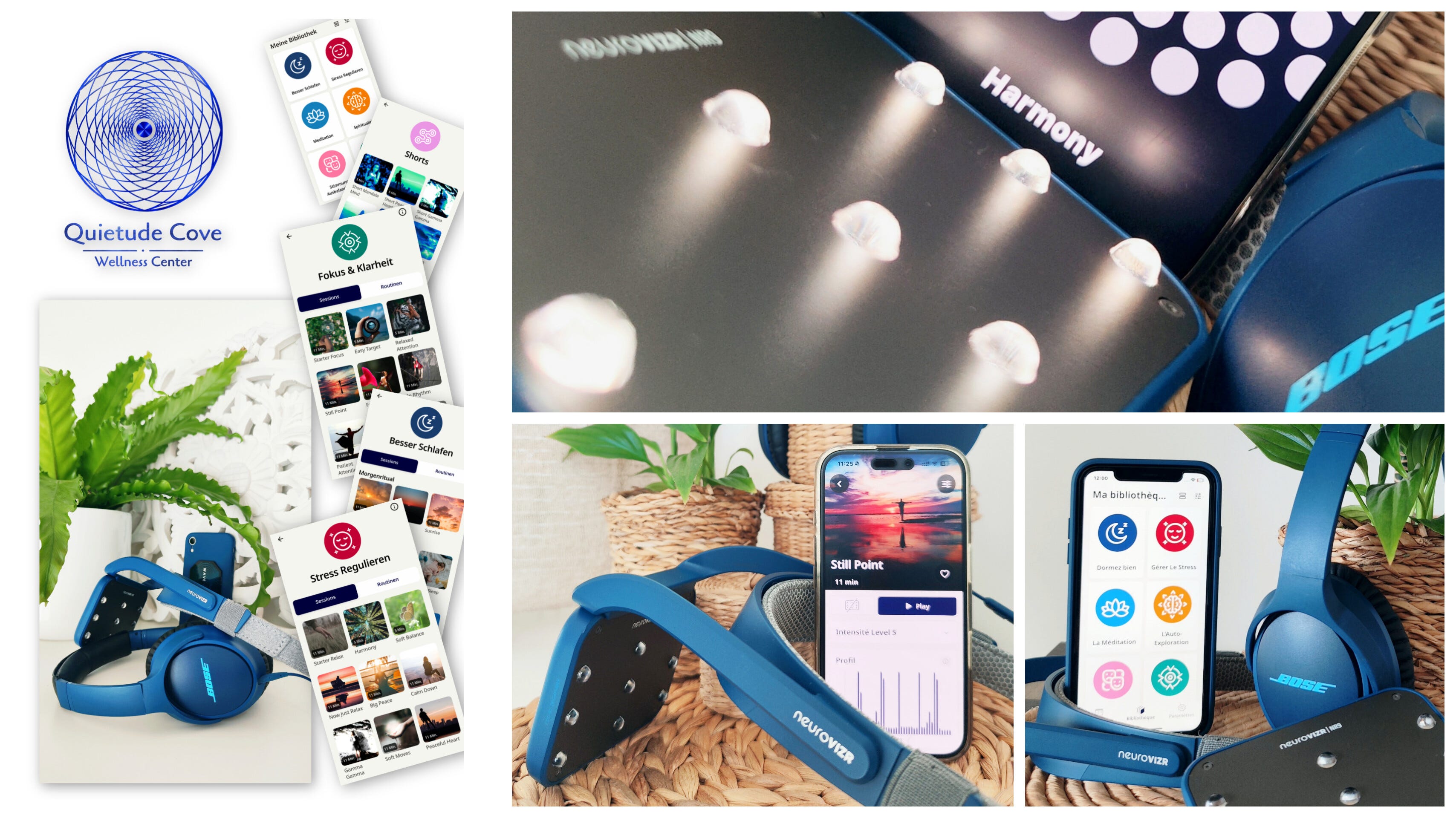
A session runs somewhere between 11 and 20 minutes. There are over a hundred programmes to choose from, grouped into families: calm, sleep, focus, creativity, meditation, recovery, drive.
You never look straight at the light. You close your eyes, and that’s when the experience begins.
Engaging the brain, rather than just leading it along
Most light-and-sound devices work through entrainment. They send out a steady rhythm, and the brain eventually falls into step with it. That works — for a while. Then the brain gets used to it and switches off: it’s a prediction machine, and a signal that stops changing stops holding its interest.
NeuroVIZR® takes the opposite approach. Its signal keeps shifting the whole time. The brain can’t get ahead of it, so it stays engaged. The manufacturer calls this Brain Engagement.
Every session follows a composed arc: prepare, introduce something new, reinforce, throw in a challenge, let it settle. That movement is where the actual work happens.
What the research shows
Three studies have looked at the device so far, using proper measurement equipment.
Back in 2023, an observational study followed participants after a single session. They reported lower stress, sharper focus and a deeper sense of relaxation.
In 2024, an EEG measurement was carried out with the Latvian Music Academy, on a group of musicians. EEG simply means sensors placed on the scalp that read the brain’s electrical activity as it happens. After the session, the brain signal showed more variability. A brain whose signal varies more is a brain that’s less locked in — more ready to adapt.
In 2025, a heart-rate measurement was taken using medical-grade equipment. The gap between two heartbeats is never exactly the same. The more that gap varies, the more flexible the nervous system is. The improvement measured was a significant one.
Why we chose this particular tool
What caught our attention was the coherence of it. Engaging the brain instead of forcing a rhythm onto it lines up with something we’ve observed for years: the body responds better to an invitation than to being pushed.
Sandy’s relationship with colour is anything but theoretical. Colour played a real part in her own journey through illness, long before it ever became something she worked with professionally. She knows, from her own experience, exactly what a light can open up in someone — more balance, more confidence in the face of adversity.
Jean-Philippe remains the eternal apprentice, with a very concrete demand of himself: holding focus for long stretches, while working around short windows of recovery. From the kitchens of Monaco to the fire stations of Paris, he spent years learning to make that work. Twenty minutes that reset the mind, whether it’s more Focus or more Calm he’s after — he knows exactly what that’s worth.
Today, the two of them lead full lives — the practice, the projects, family, and a genuine wish to help as many people as they can.
If they settled on NeuroVIZR®, it’s for a simple reason. It works on one precise point in the equation that guides everything we do:
Vitality = Potential − Obstructions
The potential is there, fully intact, in every one of us. It's the obstructions that keep it from coming through. NeuroVIZR® works on one of them in particular: the stiffness that sets in when the mind runs on the same setting for too long.
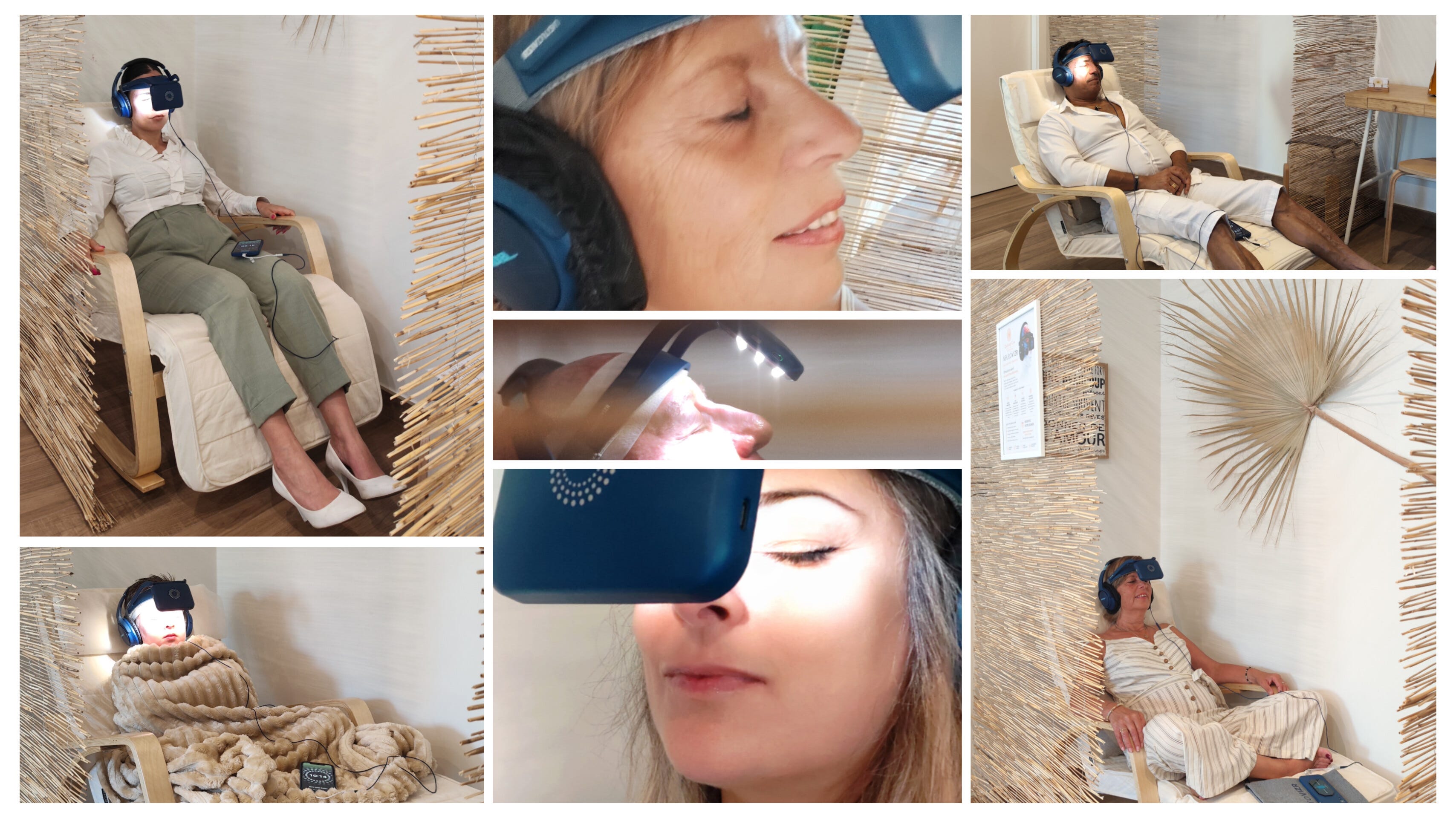
We see this reflected in what people tell us afterwards. The feedback that comes up most often mentions a clearer head, a more settled body, and sometimes sleep that finds its way back.
The main session themes
The programme is chosen together with you, based on what you’re after that day.
Calm and nervous tension. Our most requested sessions. They support release when tension has been building for a long time.
End of day and sleep. Programmes timed to the day’s rhythm, in morning, midday and evening versions. Here, regularity matters more than any single session.
Overload and recovery. When your reserves are running low, a short session asks little and gives back a lot. It’s a point of support, meant to be repeated.
Focus and clarity. Before a demanding stretch of work. Many people use it as an entry ritual.
Mood, motivation, confidence, resilience. Four dedicated themes, addressing your inner climate in the moment.
Looping thoughts. A family of programmes designed to loosen up automatic patterns rather than fight them head-on.
Creativity and meditation. For exploring things differently, with sensory support that makes it easier to slip into these states.
NeuroDosing: consistency over intensity
Some people want to take things further than the occasional session. NeuroDosing is built for exactly that.
It’s a rhythm spread out over several regular sessions. Three cycles that repeat: one of strong stimulation, one of transition, one lighter one to let it settle. The cycle runs for four to eight weeks, then you take a break.
There are around fifteen themes on offer: focus, learning, motivation, confidence, resilience, creativity, calm, blockages, burnout, addiction.
On addiction, our position is a straightforward one. A light-and-sound practice comes as support to a journey that’s already underway. It backs up the part of the work tied to inner state — the tension, the tipping points. It adds to existing support, it doesn’t stand in for it.
Breaking through a plateau
Sometimes you find yourself stuck without being in real difficulty. A decision about direction that just won’t come. A piece of work that keeps pushing back. Confidence that starts to crack as a deadline gets closer.
The learning theme, paired with focus programmes, speaks directly to this kind of moment. The goal isn’t to learn faster — it’s to become available again. Without that availability, nothing gets moving.
Sport and recovery
There’s a whole collection built for athletes. It follows three moments: preparation before the effort, execution, and recovery afterwards. It also works on reaction times.
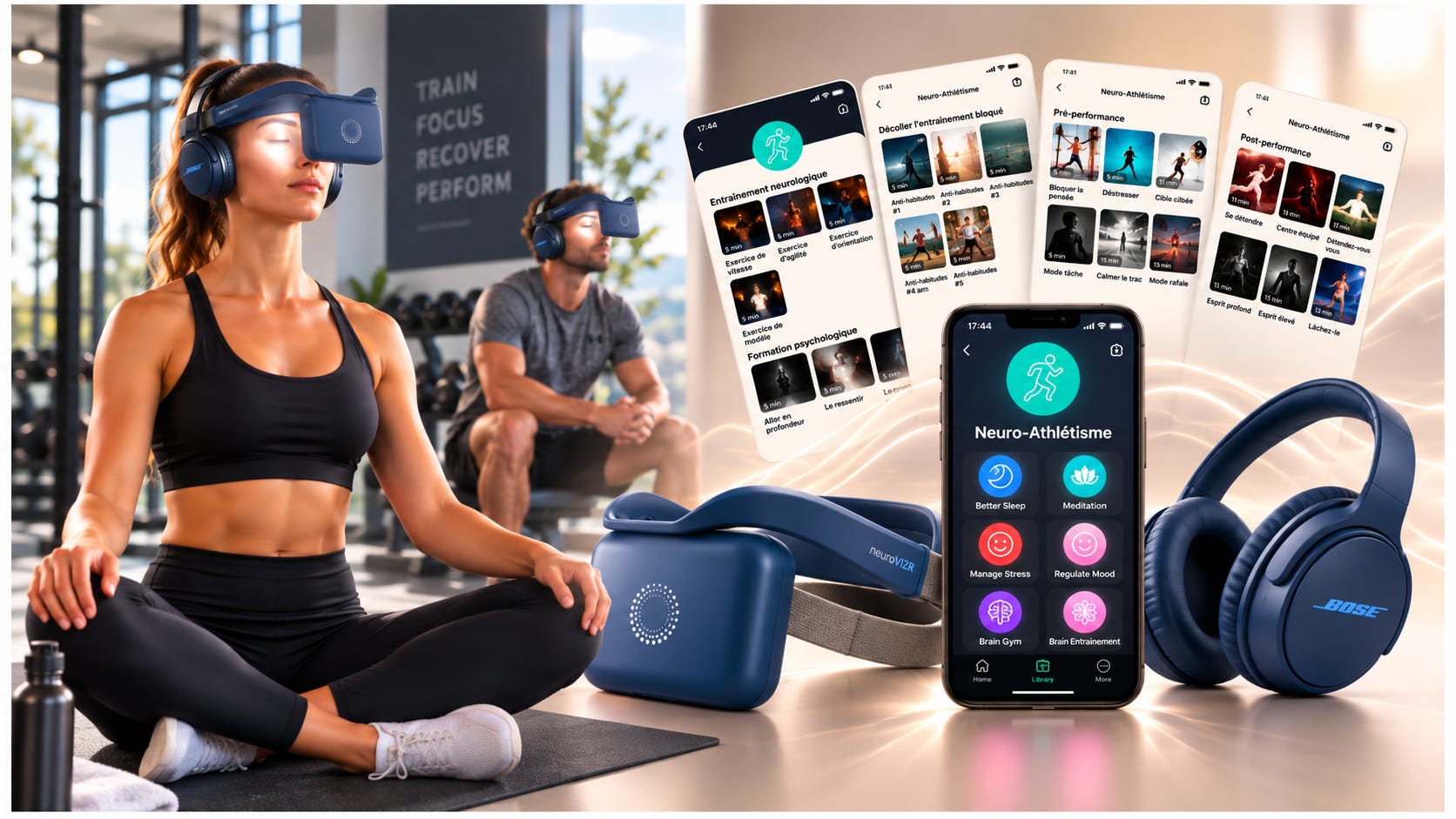
Two levels are available, including a gentler version for those trying this kind of stimulation for the first time.
Among the athletes we work with, it’s nervous recovery that makes the real difference. Muscles often bounce back faster than the mind does.
What a session looks like
You arrive, you settle in. The room is softly lit, the chair is a comfortable one.
We start with a few minutes together first — how you’re feeling today, what you’re hoping to get out of it, what time of day it is for you. Your answers shape the programme we go with.
Then we fit the headset and earphones. The session opens with a short warm-up, which prepares the nervous system. The main programme takes over from there.
During this time, there’s nothing for you to do. Nothing to get right. You close your eyes and let it come. Some sessions bring vivid colours and shapes. Others bring a deep, quiet stillness. Neither one is more successful than the other.
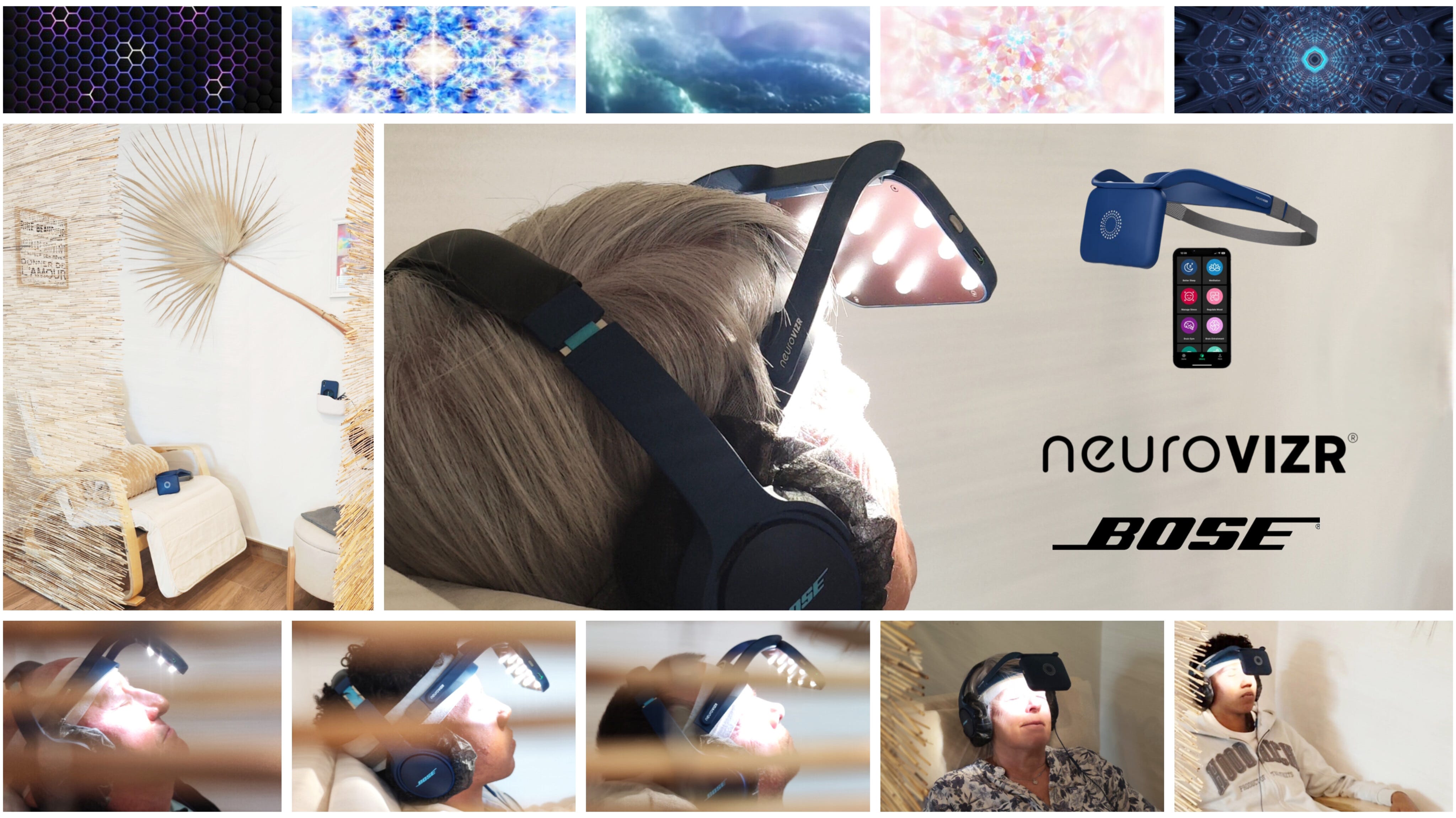
Those colours, when they show up, have a perfectly simple explanation. Even with your eyes closed, the visual system doesn’t fully switch off — it keeps processing signals, especially in quiet moments. With less coming in from the outside, the brain — which works a bit like a pattern-recognition machine — organises those internal signals into soft shapes or colours. These are what’s known as phosphenes. The rhythm of the light and sound simply gives the brain something to respond to. Nothing about it is forced: everyone’s experience is different, and none of them is more “right” than another.
Then comes Brain Time: a few minutes, eyes closed, no stimulation. It’s the quietest part of the session, and often the most important one. This is where the brain integrates what’s just happened.
For deeper, lasting work, three to five sessions a week are recommended. We adjust that rhythm together with you.
What we bring, beyond the device itself
Choosing the right programme at the right moment. Reading what you bring back from one session to the next. Adjusting as the weeks go on. And the option to combine.
That’s where the Prisma glasses come in. They filter light by colour, and each colour carries its own tendency on the nervous system: warm tones support alertness, cool tones support release, green works on balance. Depending on what you need on a given day, we can pair a set of Prisma glasses with your NeuroVIZR® session.
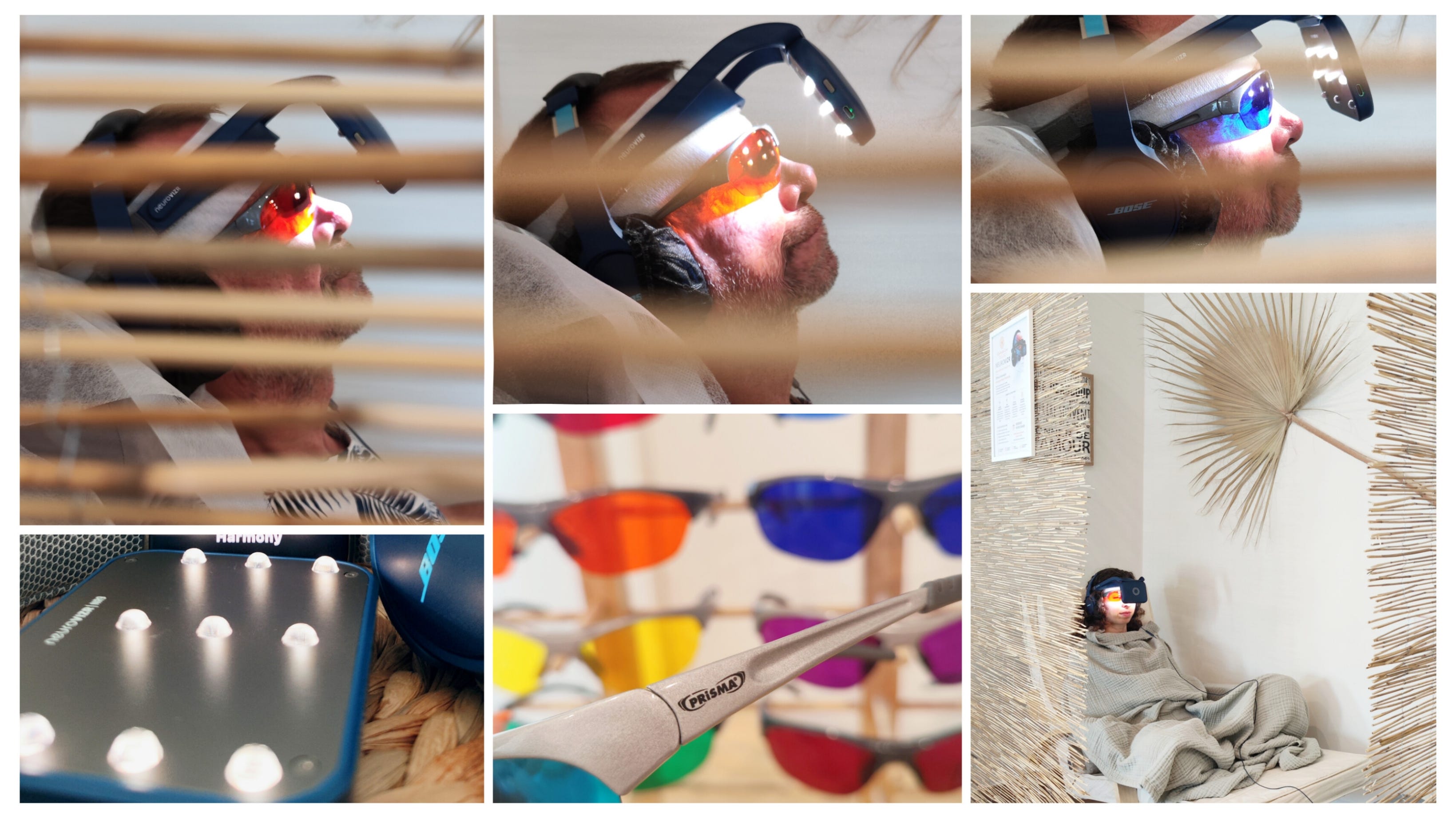
That kind of combination doesn’t happen on a whim. It comes from experience, from close observation, and from time spent genuinely listening.
The Colour Circuit, another way in
Many people first come across NeuroVIZR® inside the Colour Circuit.
This hour-long journey opens with an assessment using the Prisma glasses, continues with VitaLife, and closes with a NeuroVIZR® session. The dominant colour that emerges during the circuit gets fed back in at this final stage. So the programme is never a generic one — it grows directly out of what the circuit revealed.
Many people then come back for shorter, individual sessions that carry the work forward between circuits.
The two options
Individual NeuroVIZR® session — about 20 minutes
A short warm-up, the main programme chosen together with you, then the integration phase.
Price: €20
Colour Circuit — about 1 hour
The full journey: Prisma glasses, VitaLife, then a personalised NeuroVIZR® session.
Price: €40
Book your session
Sessions run by appointment, at the Quietude Cove practice, in the Algarve.
A question before you book? We're more than happy to talk it through first.
Find us

Quietude Cove | Wellness Center — Olhão, Algarve, Portugal
Rua do José Botelho 1A, APT B — 8700-239 Olhão
Phone / WhatsApp : +351 915 460 446
Email : contact@quietudecove.com
The place matters just as much as the practice itself. We chose the Algarve for its light, its climate and its calm: here, the setting is part of the method.
Good to know
If you’re epileptic or photosensitive, please let us know before any session. This calls for particular care, and it’s something we’ll talk through together.
If you’re pregnant, or recovering from recent surgery, it’s best to hold off, or check with a doctor beforehand.
The experiences on offer at Quietude Cove sit within a wellbeing approach. They don’t replace medical care where that’s what’s needed.
Warmly,
Sandy et Jean-Philippe
Quietude Cove Wellness Center — Algarve, Portugal